Click here to go back to the Society of Richmond Children's Centres website.

Monday, 14 November 2011

Cognitive and Social Capabilities Linked

Cognitive and Social Capabilities Linked
November 14, 2011

It is best to act with confidence, no matter how little right you have to it.
-Lillian Hellman
"Cognitive, emotional, and social capabilities are inextricably intertwined throughout the life course."  This is one of six core concepts of development outlined in the Center on the Developing Child's excellent publication, The Science of Early Childhood Development: Closing the Gap Between What We Know and What We Do.  In describing this concept, the publication continues...

"The brain is a highly integrated organ and its multiple functions operate in a richly coordinated fashion.  Emotional well being and social competence provide a strong foundation for emerging cognitive abilities, and together they are the bricks and mortar that comprise the foundation of human development.  Thus, oral language acquisition depends not only on adequate hearing, the ability to differentiate sounds, and the capacity to li nk meaning to specific words, but also on the ability to concentrate, pay attention, and engage in meaningful social interaction.  Furthermore, the emotional health, social skills, and cognitive-linguistic capacities that emerge in the early years are all important prerequisites for success in school and later in the workplace and community.  Brain architecture and the immune system also interact as they mature, which influences the domains of development and health."


Reposted from Exchange Everyday

Monday, 22 August 2011

When Babies Struggle

Reposted from Exchange Everyday........
August 22, 2011
If you insist on measuring yourself, place the tape around your heart rather than your head.
-Carol Trabelle
"Struggles between babies are natural and positive learning opportunities that develop their social and problem-solving skills.  If you monitor struggles in safe ways with babies, you provide a natural outlet for the development of their curiosity, effort, and social skills."  This advice comes from Beverly Kovach and Denise Da Ros-Voseles in one of the Exchange books on sale starting today, Being with Babies: Understanding and Responding to the Infants in Your Care.  Here a just a few of the many suggestions Kovach and Da Ros-Voseles offer when babies struggle...

  • Move nearby and watch the babies interact.
  • Move slowly and talk slowly.
  • Be patient and don't overreact to the situation.
  • W hen one baby appears uncomfortable with what is happening, quietly go to the baby and coach him or her out of the situation.  One way to do this is to offer possible suggestions.
  • Be at the babies' eye level, and close to the ground where the infants are, and identify what you see.
  • Avoid leaving the scene of the conflict before one of the babies.  Being the second one to leave decreases further conflict from happening.

Monday, 15 August 2011

The Cult of Self-Esteem

The Cult of Self-Esteem
August 15, 2011

If you believe everything you read, better not read.
-Japanese proverb
"What starts off as healthy self-esteem can quickly morph into an inflated view of self — a self-absorption and sense of entitlement that looks a lot like narcissism," observes Jean Twenge, co-author of The Narcissism Epidemic, in Atlantic Monthly (July 2011).  She explains....

"Narcissists are happy when they're younger, because they're the center of the universe.  Their parents act like their servants, shuttling them to any activity they choose and catering to their every desire.  Parents are constantly telling their children how special and talented they are.  This gives them an inflated view of their specialness compared to other human beings.  Instead of feeling good about themselves, they feel better than everyone else.

"In early adulthood t his becomes a big problem.  People who feel like they are unusually special end up alienating those around them.  They don't know how to work on teams, as well as to deal with limits.  They get into the workplace and expect to be stimulated all the time, because their worlds were so structured with activities.  They don't like being told by a boss that their work might need improvement, and they feel insecure if they don't get a constant stream of praise.  They grew up in a culture where everyone gets a trophy just for participating....  They grew up in a bubble, so they get out into the real world and then start to feel lost and helpless.  Kids who always have problems solved for them believe that they don't know how to solve problems.  And they're right — they don't."


From Exchange Everyday 

Friday, 24 June 2011

Art Auction

The Art Auction is drawing closer and as always I am profoundly in awe of the work the children and their teachers have created together.  Our staff are so skilled in guiding children in the creative process.  This year they have pushed their creative boundaries and the results are amazing. 


There are also some AMAZING items that have been donated to the Silent Auction...... tickets, gift certificates, Canucks merchandise, BC Lions gear...... gift baskets...... I know I am going to be bidding!!

Local artists Jodie Blaney and Karen Lorena Parker have also, once again, donated to our cause and I am so looking forward to seeing their pieces.  My husband and I bought 2 of Jodie's paintings on auction last year.... and we LOVE them!

As always ticket sales are slow and its hard not be disappointed about that as this is the only big fundraiser we do and the staff and Committee put in so much effort.....  Hopefully we'll see a surge in the last few days.
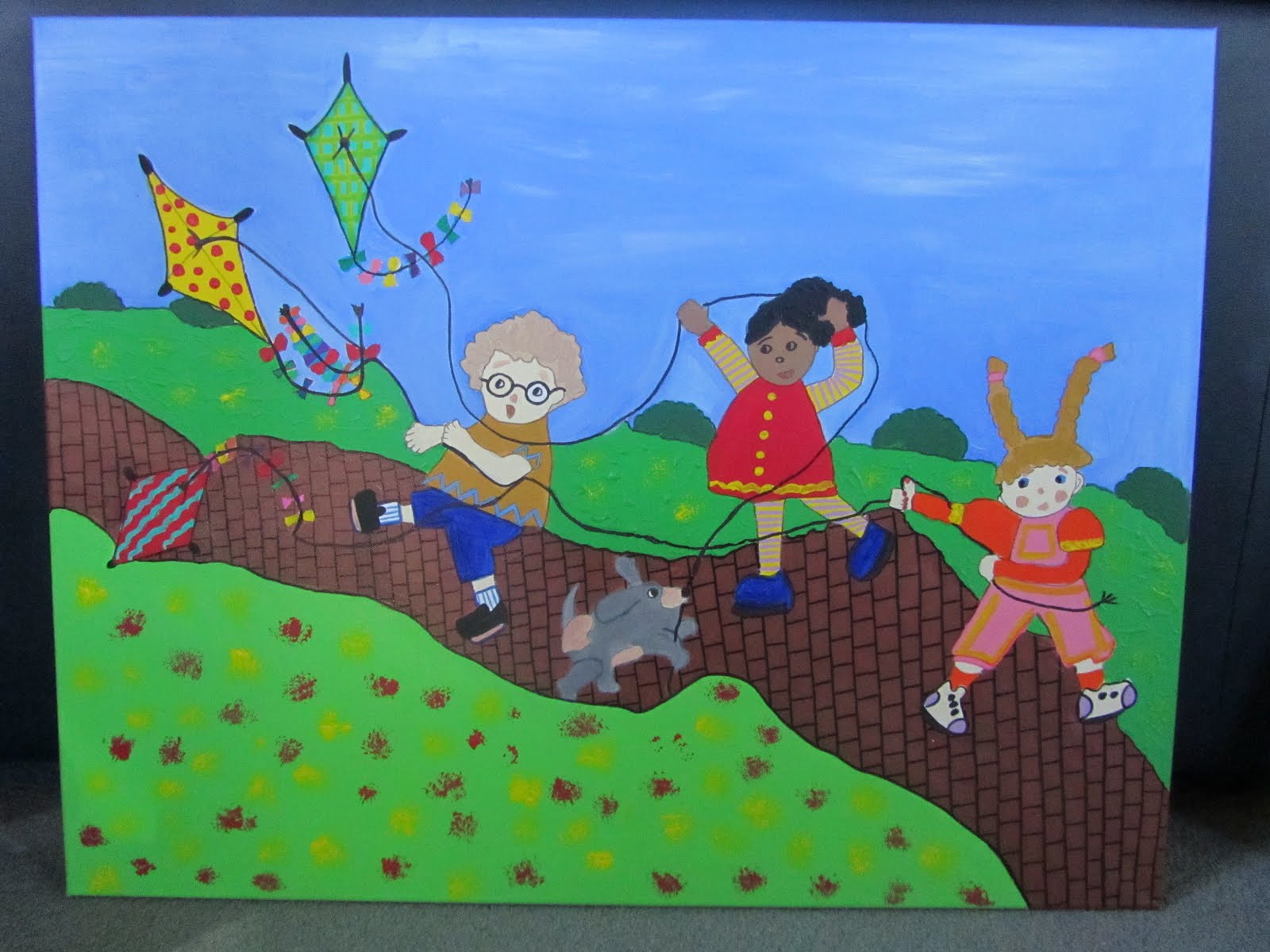
Scroll down a couple posts for updated photos of the art. Here is a small selection.......


Tuesday, 7 June 2011

Organized Too Early?

June 7, 2011
Our most important task as parents is raising children who will be decent, responsible, and caring people devoted to making this world a more compassionate place.
-Neil Kurshan
 
"Youth sports organizations are reaching deeper into the preschool years, urging parents to sign kids up for soccer or rugby as early as age 3."  This alarming claim was made by Sue Shellenbarger in her Wall Street Journal column (June 3, 2011) that was brought to our attention by Eric Karolak.  Shellenbarger shared guidelines from experts on involving kids in organized sports...


  • Avoid competition, which can be stressful for kids before the age of 7 or 8.  Keep the focus on fun.
  • Don’t make a child specialize in one sport at an early age.  Sports researchers say young players have more fun and develop better as athletes if they are encouraged to play many sports.  Well-rounded kids are also far less likely to lose interest and burn out when they reach their teens.
  • Take at least one or two seasons off each year, so kids can rest their bodies.
  • Don’t allow yourself to feel pressured by other parents who enroll their kids in lots of organized programs. 
  • From Exchange Everyday

Friday, 20 May 2011

The Seven Essential Skills Every Child Needs


Ellen Galinsky has captured relevant early childhood research and spelled out for parents and teachers the practical applications for raising well-rounded children who will reach their full potential in Mind in the Making: The Seven Essential Life Skills Every Child Needs. She groups this research into seven "essential life skills":
  • Focus and self control
  • Perspective taking
  • Communicating
  • Making connections
  • Critical thinking
  • Taking on challenges
  • Self-directed, engaged learning

Monday, 16 May 2011

Art Auction

The Society of Richmond Children's Centres Annual "Starry Night" Art Auction is to be held on July 9th at the Delta Vancouver Airport Hotel.  Tickets are now on sale for $10 each. Come out for a lovely evening of art, wonderful silent auction items to bid on , live music and lovely appetizers......

Here are some of the pieces the children are working on......


Zoom Zoom Zoom - Shadow box

Shadow Box

Shadow Box